Showing posts with label Online Website. Show all posts

Thursday, 11 June 2015

FC2 fc2.com Online Website URLs XSS (cross site scripting) Vulnerabilities (All URLs Under Domain blog.fc2.com/tag)

FC2 fc2.com Online Website URLs XSS (cross site scripting) Vulnerabilities (All URLs Under Domain blog.fc2.com/tag)


Domain:
blog.fc2.com/


"FC2 (founded July 20, 1999) is a popular Japanese blogging host, the third most popular video hosting service in Japan (after YouTube and Niconico), and a web hosting company headquartered in Las Vegas, Nevada. It is the sixth most popular website in Japan overall (as of January 2014). FC2 is an abbreviation of "Fantastic Kupi-Kupi (クピクピ)". It is known to allow controversial adult content such as pornography and hate speech (unlike many of its competitors). The company uses rented office space for its headquarters which it shares with many other U.S.-based businesses. It also pays taxes in the United States. The physical servers are located in the United States. However, it is believed that the majority of the company and its users (including employees) are located within Japan" (Wikipedia)


The Alexa rank of fc2.com is 52 on February 18 2015. It is the toppest Japanese local website sevice.
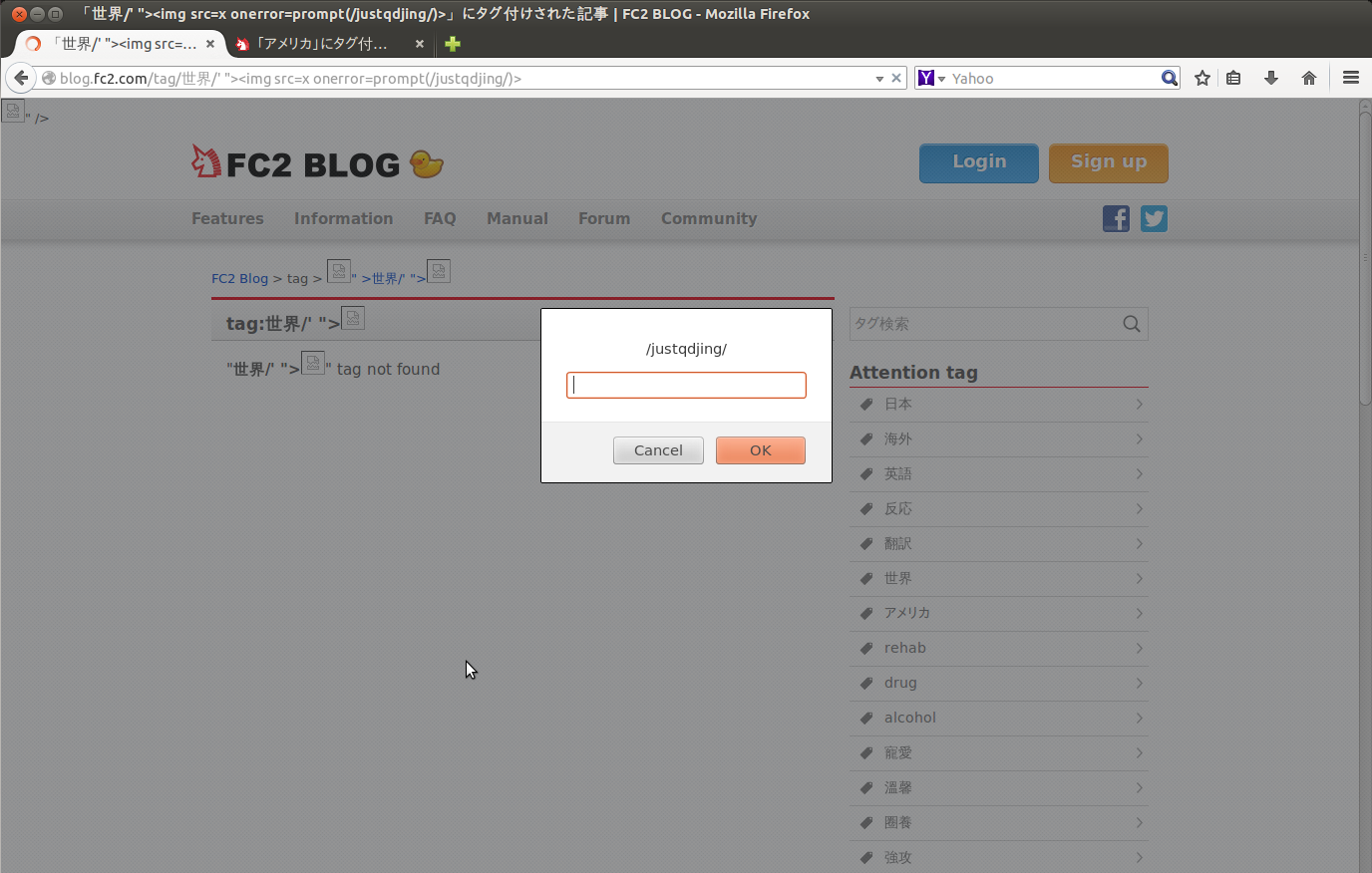


(1) Vulnerability description:

FC2 has a computer cyber security bug problem. It is vulnerable to XSS attacks. Here is the description of XSS: "Hackers are constantly experimenting with a wide repertoire of hacking techniques to compromise websites and web applications and make off with a treasure trove of sensitive data including credit card numbers, social security numbers and even medical records. Cross-site Scripting (also known as XSS or CSS) is generally believed to be one of the most common application layer hacking techniques Cross-site Scripting allows an attacker to embed malicious JavaScript, VBScript, ActiveX, HTML, or Flash into a vulnerable dynamic page to fool the user, executing the script on his machine in order to gather data. The use of XSS might compromise private information, manipulate or steal cookies, create requests that can be mistaken for those of a valid user, or execute malicious code on the end-user systems. The data is usually formatted as a hyperlink containing malicious content and which is distributed over any possible means on the internet." (Acunetix)


The programming code flaw occurs at fc2 URLs' filenames . Fc2 only filter part of the filenames in the urls. Almost all urls are affected under domain blog.fc2.com/tag are affected. i.e. 
http://blog.fc2.com/tag//>レシピブログに参加中♪


The vulnerability can be attacked without user login. Tests were performed on Firefox (37.02) in Ubuntu (14.04) and IE (9.0.15) in Windows 7. The bugs found by using CSXDS.


POC Code:
http://blog.fc2.com/tag/drug//"><img src=x onerror=prompt('justqdjing')>
http://blog.fc2.com/tag//アメリカ//"><img src=x onerror=prompt('justqdjing')>
http://blog.fc2.com/tag/tag/翻訳//"><img src=x onerror=prompt('justqdjing')>
http://blog.fc2.com/tag//>レシピブログに参加中//"><img src=x onerror=prompt('justqdjing')>


Poc Video:


Vulnerability Disclosure:
Those vulnerabilities were reported to rakuten-cert@rakuten.co.jp in 2014. No one replied. Until now, they are still unpatched.


Bug Discover:
Wang Jing, Division of Mathematical Sciences (MAS), School of Physical and Mathematical Sciences (SPMS), Nanyang Technological University (NTU), Singapore. (@justqdjing)


=================================


FC2 fc2.comオンラインのウェブサイトのURL XSS(クロスサイトスクリプティング)脆弱性(ドメインblog.fc2.com/tag下にあるすべてのURL)


ドメイン:
blog.fc2.com/


"FC2(エフシーツー)は、アメリカ合衆国ネバダ州ラスベガスに本社を置く、Webサービスおよびホスティングサービスを展開する企業。日本を中心に事業展開を行なっている。社名のFC2は「ファンタスティック・クピ・クピ」の略であるとしている。 会社の代表者は、設立当初から2008年までは日本人の高橋理洋(CEO)が務めたが、2009年からMaurice Bannon、2012年にはLance Wolff Kerness、2014年はDEREK G ROWLEYが務めている。"  (ja.wikipedia.org)


(1)脆弱性の説明:

FC2は、コンピュータのサイバーセキュリティバグの問題があります。これは、XSS攻撃に対して脆弱です。ここでXSSの説明は次のとおりです。「ハッカーは常にWebサイトやWebアプリケーションを侵害し、クレジットカード番号、社会保障番号、さらには医療記録などの機密データの宝庫でオフにする技術をハッキングの幅広いレパートリーで実験されている4クロス。サイトスクリプティングは、(また、XSSやCSSとして知られる)は、一般のVBScript、ActiveXの、HTML、またはFlashはに対して脆弱動的ページに、攻撃者が悪意のあるJavaScriptを埋め込むことができ、最も一般的なアプリケーション層ハッキング技術クロスサイトスクリプティングの一つであると考えられていますデータを収集するために、自分のマシン上でスクリプトを実行して、ユーザーをだます。XSSの使用が有効なユーザーの方に誤解されるか、または最後に悪質なコードを実行できる要求を作成し、操作したり、クッキーを盗む、個人情報を危険にさらす可能性があります-userシステムでは、データは通常、悪質なコンテンツを含むハイパーリンクとしてフォーマットされ、インターネット上の任意の可能な手段を介して配布されています。」 (会社のAcunetix)


プログラミングコードの欠陥は、FC2のURL」のファイル名で発生します。 FC2は、URLだけでファイル名の一部をフィルタリングします。ほぼすべてのURLが影響を受けますblog.fc2.com/tagドメインの下に影響を受けています。すなわち
http://blog.fc2.com/tag//>レシピブログに参加中♪


この脆弱性は、ユーザのログインなしで攻撃される可能性があります。試験は、Windows 7でのUbuntuでのFirefox(37.02)(14.04)およびIE(9.0.15)で行いました。


POCコード:
http://blog.fc2.com/tag/drug//"><img SRC = X onerror =alert( 'justqdjing')>
http://blog.fc2.com/tag//アメリカ// "> <IMG src = X onerror =alert( 'justqdjing')>
http://blog.fc2.com/tag/tag/翻訳// "> <IMG src = X onerror =alert( 'justqdjing')>
http://blog.fc2.com/tag//>レシピブログに参加中// "> <IMG src = X onerror =alert( 'justqdjing')>


脆弱性の公開:
これらの脆弱性は誰も答えていない2014年にrakuten-cert@rakuten.co.jpすることが報告されました。今までは、彼らはまだパッチを適用していないです。


バグを発見:
王ジン (Wang Jing)、数理科学研究部門(MAS)、物理的および数理科学科(SPMS)、南洋理工大学(NTU)、シンガポール。 (@justqdjing)


POCビデオ:


Wednesday, 10 June 2015

Rakuten Online Website Open Redirect (URL Redirection) Cyber Security Vulnerabilities


Rakuten Online Website Open Redirect (URL Redirection) Cyber Security Vulnerabilities


Domain:
rakuten.com

"Rakuten, Inc. (楽天株式会社 Rakuten Kabushiki-gaisha?) is a Japanese electronic commerce and Internet company based in Tokyo, Japan. Its B2B2C e-commerce platform Rakuten Ichiba is the largest e-commerce site in Japan and among the world’s largest by sales. Hiroshi Mikitani founded the company in February 1997 as MDM, Inc., and is still its chief executive. Rakuten Shopping Mall (楽天市場 Rakuten Ichiba?) started operations in May 1997. In June 1999, the company changed its name to Rakuten, Inc. The Japanese word rakuten means optimism. In 2012, the company's revenues totaled US$4.6 billion with operating profits of about US$244 million. In June 2013, Rakuten, Inc. reported it had a total of 10,351 employees worldwide. In 2005, Rakuten started expanding outside Japan, mainly through acquisitions and joint ventures. Its acquisitions include Buy.com (now Rakuten.com Shopping in the US), Priceminister (France), Ikeda (now Rakuten Brasil), Tradoria (now Rakuten Deutschland), Play.com (UK), Wuaki.tv (Spain), and Kobo Inc. (Canada). The company has investments in Pinterest, Ozon.ru, AHA Life, and Daily Grommet."  (Wikipedia)


The Alexa rank of rakuten.co.jp is 64 on May 29 2015. It is the second toppest Japanese local sevice website.


(1) Vulnerability Description:

Rakuten online website has a computer cyber security bug problem. It can be exploited by Open Redirect (Unvalidated Redirects and Forwards) attacks. Here is the description of Open Redirect: "A web application accepts a user-controlled input that specifies a link to an external site, and uses that link in a Redirect. This simplifies phishing attacks. An http parameter may contain a URL value and could cause the web application to redirect the request to the specified URL. By modifying the URL value to a malicious site, an attacker may successfully launch a phishing scam and steal user credentials. Because the server name in the modified link is identical to the original site, phishing attempts have a more trustworthy appearance." (From CWE)


The program code flaw can be attacked without user login. Tests were performed on Microsoft IE (9 9.0.8112.16421) of Windows 7, Mozilla Firefox (37.0.2) & Google Chromium 42.0.2311 (64-bit) of Ubuntu (14.04.2),Apple Safari 6.1.6 of Mac OS X v10.9 Mavericks.

Since know only a little Japanese, not sure whether Rakuten pays much attention to Open Redirect Vulnerabilities or not. These bugs were found by using URFDS.


(2) Use one of webpages for the following tests. The webpage address is "http://itinfotech.tumblr.com/". Can suppose that this webpage is malicious.


Vulnerable URL 1:

POC Code:


Vulnerable URL 2:

POC Code:


Vulnerable URL 3:

POC Code:


Vulnerability Disclosure:
Those vulnerabilities are not patched now.


Bug Discover:
Wang Jing, Division of Mathematical Sciences (MAS), School of Physical and Mathematical Sciences (SPMS), Nanyang Technological University (NTU), Singapore. (@justqdjing)


============


楽天オンラインサイトオープンリダイレクト(URLリダイレクション)サイバー·セキュリティの脆弱性


ドメイン:
rakuten.com

「楽天株式会社は、(楽天株式会社楽天株式会社-gaisha?)東京、日本に拠点を置く日本の電子商取引やインターネット企業です。そのB2B2Cの電子商取引プラットフォーム楽天市場は、日本最大の電子商取引サイトで、世界の中で販売による最大。三木谷浩史は、MDM、株式会社として1997年2月で会社を設立し、さらにその最高経営責任者(CEO)である。楽天ショッピングモール(楽天市場楽天市場?)1999年6月1997年5月で事業を開始し、同社は社名変更楽天株式会社に日本語ワード楽天楽観を意味している。2012年には、同社の売上高は、米国約US2.44億ドルの営業利益との46億ドルとなりました。2013年6月には、楽天株式会社は、それが世界中の10351名の従業員を有していたと報告した。で2005年、楽天は、主に買収や合弁事業を通じて、日本国外で拡大し始めた。その買収は、Buy.com(米国で今Rakuten.comショッピング)、Priceminister(フランス)、池田(現楽天ブラジル)、Tradoria(今楽天ドイツ)が挙げられます、Play.com(英国)、Wuaki.tv(スペイン)、およびコボ(カナダ)。同社はPinterest、Ozon.ru、AHA生活、毎日のグロメットで投資を行っている。」(ウィキペディア)


rakuten.co.jpのAlexaのランクは、第2 toppest日本の地方流通サービスのウェブサイトである5月29日2015年64あります。


(1)脆弱性の説明:

楽天のオンラインウェブサイトは、コンピュータのサイバーセキュリティバグの問題があります。それは、オープンリダイレクト(未検証のリダイレクトとフォワード)攻撃によって悪用される可能性があります。ここでオープンリダイレクトの説明は次のとおりです。「Webアプリケーションは外部サイトへのリンクを指定するユーザ制御入力を受け付け、リダイレクトでそのリンクを使用しています。これは、フィッシング攻撃を簡素化HTTPパラメータがURL値が含まれており、可能性があります。。指定されたURLに要求をリダイレクトするようにWebアプリケーションを引き起こす。悪質なサイトへのURLの値を変更することにより、攻撃者がフィッシング詐欺を起動し、ユーザーの資格情報を盗むことができる。変更されたリンク内のサーバー名が、元のサイトと同じであるため、フィッシングの試みは、より信頼性の高い外観を持っています。」 (CWEから)


プログラムコードの欠陥は、ユーザのログインなしで攻撃される可能性があります。テストは、Windows 7のMicrosoftのIE(9 9.0.8112.16421)で行われた、Mozilla Firefoxの(37.0.2)&グーグルクロム42.0.2311のUbuntuの(64ビット)(14.04.2)はMac OSのアップルのSafari 6.1.6 X v10.9マーベリックス。

楽天リダイレクトの脆弱性かどうかを開くために多くの注意を払っているかどうかわからない、少しだけ日本語を知っているので。


(2)以下の試験のためのWebページのいずれかを使用します。ウェブページアドレスは「http://itinfotech.tumblr.com/」です。このウェブページに悪意であるとすることができます。


脆弱URL 1:

POCコード:


脆弱URL 2:

POCコード:


脆弱URL 3:

POCコード:


脆弱性の公開:
これらの脆弱性は、現在パッチが適用されていません。


バグを発見:
王ジン (Wang Jing)、数理科学研究部門(MAS)、物理的および数理科学科(SPMS)、南洋理工大学(NTU)、シンガポール。 (@justqdjing)


POCビデオ:


詳細:


===========


Monday, 1 September 2014

GitHub Website Service OAuth 2.0 Covert Redirect Web Security Bugs (Information Leakage & Open Redirect)


GitHub Website Service OAuth 2.0 Covert Redirect Web Security Bugs (Information Leakage & Open Redirect)


(1) Domain:
github.com


"GitHub is a web-based Git repository hosting service, which offers all of the distributed revision control and source code management (SCM) functionality of Git as well as adding its own features. Unlike Git, which is strictly a command-line tool, GitHub provides a web-based graphical interface and desktop as well as mobile integration. It also provides access control and several collaboration features such as wikis, task management, and bug tracking and feature requests for every project. GitHub offers both plans for private repositories and free accounts, which are usually used to host open-source software projects. As of 2015, GitHub reports having over 9 million users and over 21.1 million repositories, making it the largest code hoster in the world." (Wikipedia)


(2) Vulnerability Description:
GitHub web application has a computer security problem. Hacker can exploit it by Covert Redirect cyber attacks. 


The vulnerabilities can be attacked without user login. Tests were performed on Microsoft IE (10.0.9200.16750) of Windows 8, Mozilla Firefox (34.0) & Google Chromium 39.0.2171.65-0 ubuntu0.14.04.1.1064 (64-bit) of Ubuntu (14.04),Apple Safari 6.1.6 of Mac OS X Lion 10.7. 


(2.1) Vulnerability Detail:
GitHub's OAuth 2.0 system is susceptible to Attacks. More specifically, the authentication of parameter "&redirct_uri" in OAuth 2.0 system is insufficient. It can be misused to design Open Redirect Attacks to GitHub.


At the same time, it can be used to collect sensitive information of both third-party app and users by using the following parameters (not all apps),
"&response_type"=sensitive_info,token...
"&scope"=email,user_birthday,user_likes...


It increases the likelihood of successful Open Redirect Attacks to third-party websites, too.


The vulnerabilities occurs at page "oauth/authorize?" with parameter "&redirect_uri", e.g.


Before acceptance of third-party application:
When a logged-in GitHub user clicks the URL ([1]) above, he/she will be asked for consent as in whether to allow a third-party website to receive his/her information. If the user clicks OK, he/she will be then redirected to the URL assigned to the parameter "&redirect_uri".


If a user has not logged onto GitHub and clicks the URL ([1]) above, the same situation will happen upon login.


After acceptance of third-party application:
A logged-in GitHub user would no longer be asked for consent and could be redirected to a webpage controlled by the attacker when he/she clicks the URL ([1]).


For a user who has not logged in, the attack could still be completed after a pop-up page that prompts him/her to log in.


(2.1.1) GitHub would normally allow all the URLs that belong to the domain of an authorized third-party website. However, these URLs could be prone to manipulation. For example, the "&redirect_uri" parameter in the URLs is supposed to be set by the third-party websites, but an attacker could change its value to make Attacks. 


Hence, a user could be redirected from GitHub to a vulnerable URL in that domain first and later be redirected from this vulnerable site to a malicious site unwillingly. This is as if the user is redirected from GitHub directly. The number of GitHub's OAuth 2.0 client websites is so huge that such Attacks could be commonplace.


More seriously, some third-party websites may allow all URLs (even not belong to themselves) for "&redirect_uri" parameter.


Before acceptance of the third-party application, GitHub's OAuth 2.0 system makes the redirects appear more trustworthy and could potentially increase the likelihood of successful Open Redirect Attacks of third-party website.


Once the user accepts the application, the attackers could completely bypass GitHub's authentication system and attack more easily.


It might be of GitHub's interest to patch up against such attacks. 


(2.2) Use one of my webpages for the following tests. The webpage is "http://shellmantis.tumblr.com/". Can suppose it is malicious and contains code that collect sensitive information of both third-party app and users.


Below is an example of a vulnerable third-party domain:
travis-ci.com


Vulnerable URL from GitHub that is related to travis-ci.com:


POC:


(2.3) The following URLs have the same vulnerabilities.


POC Video:


Blog Detail:


(3) What is Covert Redirect? 

Covert Redirect is a class of security bugs disclosed in May 2014. It is an application that takes a parameter and redirects a user to the parameter value without sufficient validation. This often makes use of Open Redirect and XSS (Cross-site Scripting) vulnerabilities in third-party applications.


Covert Redirect is also related to single sign-on. It is known by its influence on OAuth and OpenID. Hacker may use it to steal users' sensitive information. Almost all OAuth 2.0 and OpenID providers worldwide are affected. Covert Redirect can work together with CSRF (Cross-site Request Forgery) as well.


Discover and Reporter:
Jing Wang, Division of Mathematical Sciences (MAS), School of Physical and Mathematical Sciences (SPMS), Nanyang Technological University (NTU), Singapore. (@justqdjing)


Related Articles: